Change management or leadership?
Xytal is a change management consultancy. By that I mean we use practical tools and techniques that help organisations move from where they are today to where they want to be more quickly, more safely and with less wasted effort. Having said that, we often find ourselves talking just as much about leadership. Some people wonder whether that is a contradiction.
Recently, this became much clearer to me whilst working with a group I’ve known for many years. It is a very safe group, which means we can look both inwards and outwards without creating anxiety. We came together because of a shared frustration. Things simply were not working as intended. Agreements that everyone thought were clear were proving to be less clear in practice, and the evidence was straightforward: agreed processes were not being followed.
Looking at ‘rules violations’
We started exploring this through the framework of ‘rules violations.’
It’s always a cheap trick, but it rarely fails to raise a smile. I ask people whether they consider themselves to be law abiding citizens. Unsurprisingly, almost everyone says yes. I then ask who has never exceeded a 30 mile an hour speed limit. Once we’ve established that we are, in fact, in a room full of hardened criminals, it creates the perfect introduction to the conversation that follows.
To explore the subject further, I borrowed heavily from the work of Steve Forward, former Chief Executive of the aviation safety organisation CHIRP. Steve kindly shared his material with me after I admitted I had never really understood the concept of a ‘Just Culture’, which perhaps says something about my years working in the NHS.
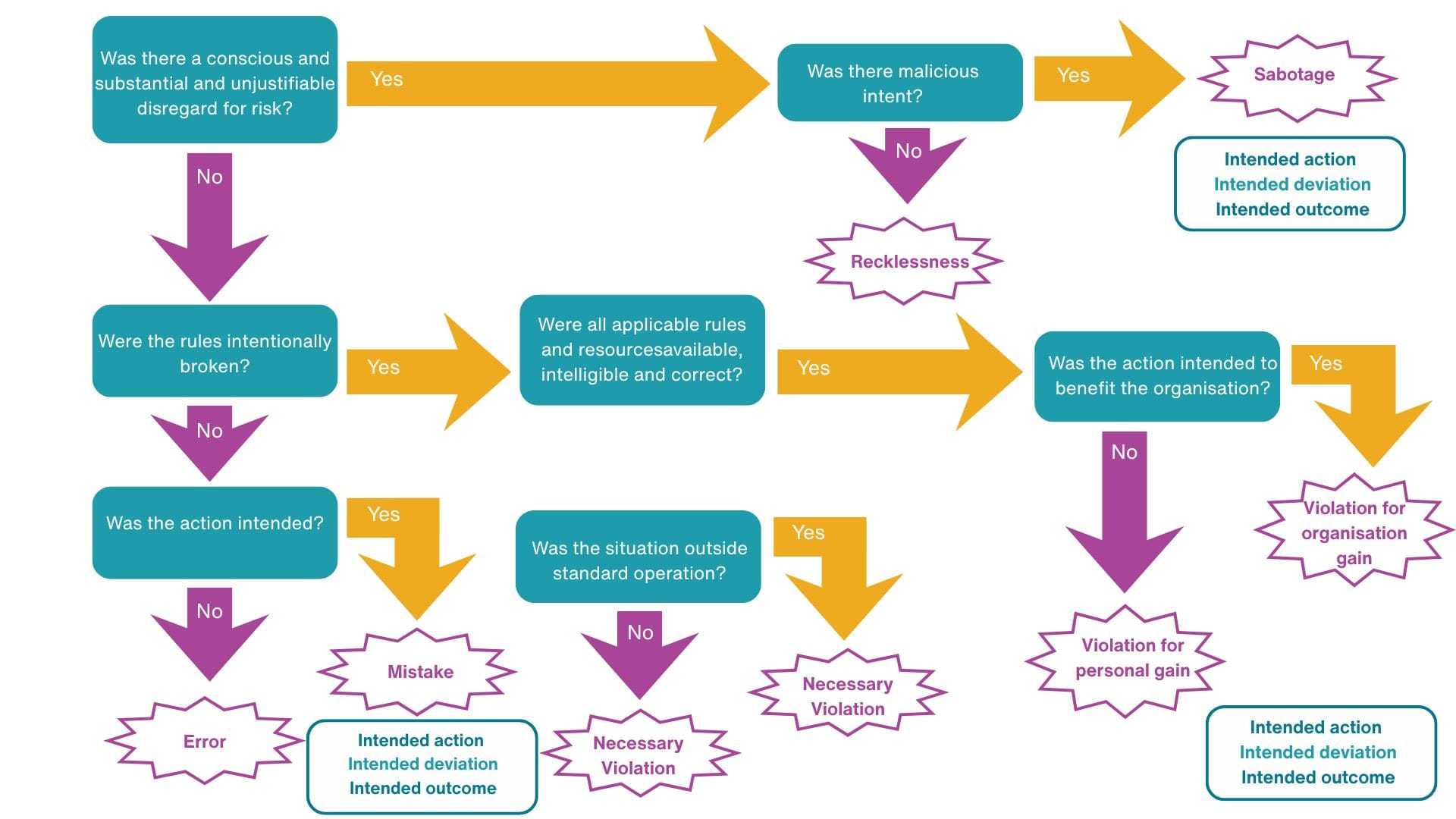
What struck the group almost immediately was that, once you understand where a particular “rules violation” sits within the different types of behaviour, the appropriate managerial or leadership response becomes almost self evident.
If someone has made a genuine mistake, where they neither ignored the risk nor intentionally broke the rules, then sanctioning them achieves very little. What they probably need is more training. Different behaviours require different responses.
Choosing the Right Leadership Approach
The conversation became even more interesting because, alongside discussing the behaviour of relatively junior staff, we were also talking about the behaviour of senior leaders. For that, we used Daniel Goleman’s leadership styles as our framework.
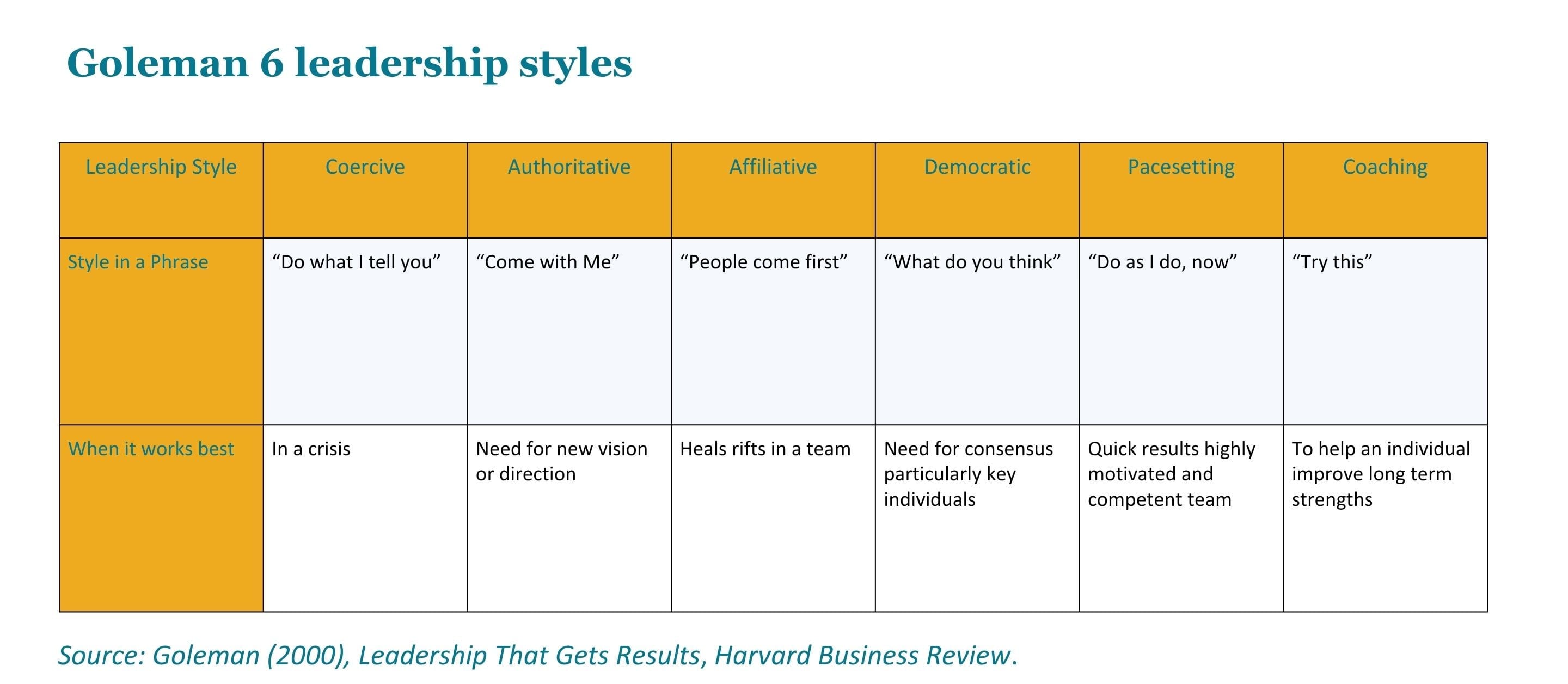
The group quickly recognised that different situations call for different leadership approaches. On reflection, they felt that many of their teams would benefit more from coaching or pacesetting than from more directive styles.
Then something interesting happened.
As soon as we moved from theory to discussing real examples, the conversation shifted. Faced with frustration, people instinctively reverted to saying that “things should just be sorted out.”
At that point, I found myself pointing out a contradiction.
- We all agreed that analysing errors was valuable, yet we rarely took the time to do it.
- We agreed that coaching and pacesetting were often the most appropriate leadership styles, yet our instinctive responses were authoritative.
The contradiction was obvious.
Why this matters?
That conversation reinforced something I have been thinking for some time.
I worry that many leadership development programmes are not sufficiently grounded in the day-to-day reality faced by emerging clinical leaders. Leadership can sometimes become an abstract subject, disconnected from the practical work of improving services.
For me, power is the ability to influence an individual or an organisation to do something it would not otherwise have done. Leaders use that power to move organisations towards a better future. If they are not changing how work is done, then what exactly are we asking leadership to achieve?
Healthcare is fundamentally a doing profession. Leadership only has value if it improves delivery.
Culture, process and leadership
During the discussion, I also realised that we were, perhaps without realising it, talking about culture.
If culture is simply “the way things are done around here”, then everyone in the room wanted to change the culture. They were frustrated with the current way of working and wanted things to happen differently.
Interestingly, they were not asking to spend time discussing values or writing mission statements that would never be referred to again. They wanted processes to work better. They wanted behaviours to change. They wanted different outcomes.
That is where operations management, leadership and culture stop being separate subjects and start becoming different ways of looking at the same challenge.
So where does leadership and change begin?
These connections explain why, when organisations ask us to support leadership development, we quite shamelessly introduce discussions about:
- Process
- Human behaviour
- Culture
Equally, when organisations ask us to support process improvement, we equally shamelessly introduce discussions about:
- Leadership
- Human behaviour
- Culture
The more I work in healthcare improvement, the more convinced I become that these are not separate disciplines. They are interconnected. Change depends on people, people work within processes, and together those processes shape culture.
Perhaps that is why I no longer see any contradiction in describing Xytal as a healthcare change consultancy that spends so much time talking about leadership.
After all, healthcare is delivered by people. Everything else follows from that.