Process Improvement
Practice Support
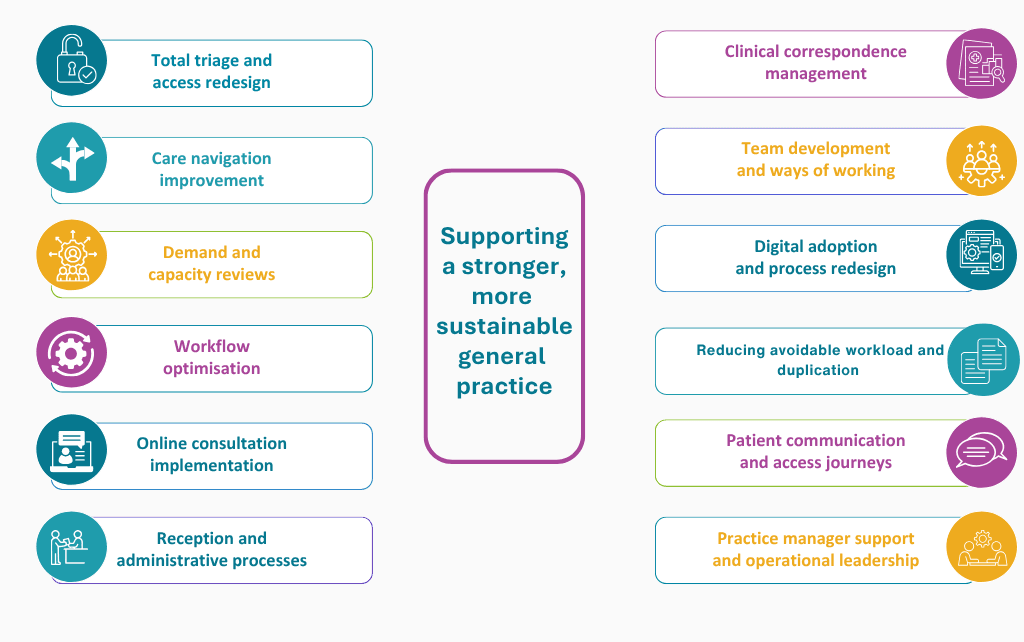
Xytal provides bespoke hands on support to practices and primary care teams looking to improve ways of working, strengthen access, reduce operational pressure, and build sustainable improvement.
Our experienced facilitators work alongside practices as a trusted extension of the team, helping create practical, measurable change that works in the reality of day to day practice life.
Drawing on years of experience supporting practices across England, we help teams improve productivity, strengthen patient access, and create more sustainable ways of working without adding unnecessary complexity.
Who We Work With
Our Practice Support programmes are designed for:
- General practices experiencing operational pressure
- Practices implementing or refining total triage models
- Teams struggling with workload, demand, or patient access
- Practice managers needing additional operational support
- PCNs looking to improve consistency across teams
- Teams needing dedicated time and facilitation to drive improvement
- Practices wanting to make better use of digital tools and workflows
How it works
Every practice is different, so our support is tailored to your team, pressures, and priorities. We work alongside you to understand current challenges, identify opportunities for improvement, and support implementation in a practical and manageable way.
This may include:
- Observing current processes and patient journeys
- Reviewing access and demand data
- Facilitating team workshops
- Mapping workflows and identifying duplication
- Supporting care navigation and triage processes
- Developing practical SOPs and minimum standards
- Helping teams embed sustainable changes over time
Challenges that you or your teams might be facing
Identifying and addressing pain points is crucial for enhancing productivity, satisfaction, and overall success.
Inefficient Processes
Delays in appointment access for patients, avoidable errors; increased wait times, and decreased patient satisfaction.
Poor Data Utilisation and Decision-making
Inaccurate or incomplete data can lead to erroneous conclusions and ineffective decision-making. Poor data quality may hinder the identification of areas for improvement and the evaluation of intervention effectiveness.
Patient Safety Incidents
Changes to healthcare processes that are not carefully planned or implemented can have unintended consequences for patient care. This may include errors, omissions, or disruptions in care delivery that compromise patient safety and outcomes.
Challenges with technology
Integration issues, interoperability problems, and inadequate staff training on new technologies can hinder the adoption and effectiveness of technology-enabled process improvement in healthcare, leading to frustration and inefficiencies.
Non-compliance with Regulations
Non-compliance may negatively impact patient safety and quality of care.
Poor Morale and Engagement
Decreased productivity, staff burnout, ultimately increase the risk of patient safety incidents.
Case Study: Implementing Total Triage at Health Care First
Serving 32,000 patients across multiple sites, Health Care First faced a major shift: implementing a new total triage model. They faced important decisions around team roles, patient communication, and how best to integrate new systems.
We worked with them to:
- Clarify the vision and set a realistic timeline
- Map out critical processes through workshops
- Define job standards and rework rotas
- Create clear messaging for both staff and patients
The outcome was a confident transition to a clinically led triage system, improving access for patients and reducing pressure on the team.
Read the full case study here.


Book your free consultation
We work with you to eliminate waste, reduce errors and optimise resources. Our teams enable you to improve patient care delivery and we equip you to continually innovate and improve in the future.
Get the latest healthcare news & insights every month.
By signing up to our mailing list, you will receive exclusive access to industry news, insights, future articles and privileged access to our extensive library.