OVERVIEW
Southampton City Council partnered with Xytal to co-design a leadership development programme. Recognising that colleagues may already have taken part in a range of leadership development programmes, this programme provided additional support to address gaps and provide additional focus on areas where participants may lack confidence, across Adult Social Care. Rather than delivering a pre-built training package, the engagement began with three discovery sessions in which leaders reflected openly on what leadership feels like day-to-day, shared what works well, and identified what gets in the way.
The aim was to build a programme that gives leaders confidence, practical skills and tools to drive great day-to-day practice, shaped directly by the people who would take part in it. Facilitation was led by Charlotte Hilton and Tom O’Sullivan, working in partnership with participants rather than arriving with pre-set answers.
THE CHALLENGE
Across the discovery sessions, participants surfaced a consistent set of pressures affecting leadership at every level:
- Change fatigue, fragmented teams and inconsistent accountability across services
- Poor or inconsistent communication, and a lack of clear procedures
- Low self-confidence and fear of criticism when making decisions or giving feedback
- Inconsistent policies, professional isolation, and legislative barriers to acting with autonomy
- A tendency toward a “fixing reflex” rather than coaching others to find their own solutions
Participants were also clear about what they needed to move past these challenges: clearer procedures, stronger coaching skills, better use of technology, and more opportunities for cross-team learning.
THE APPROACH
The programme was built through three co-design sessions, each building on feedback from the last:
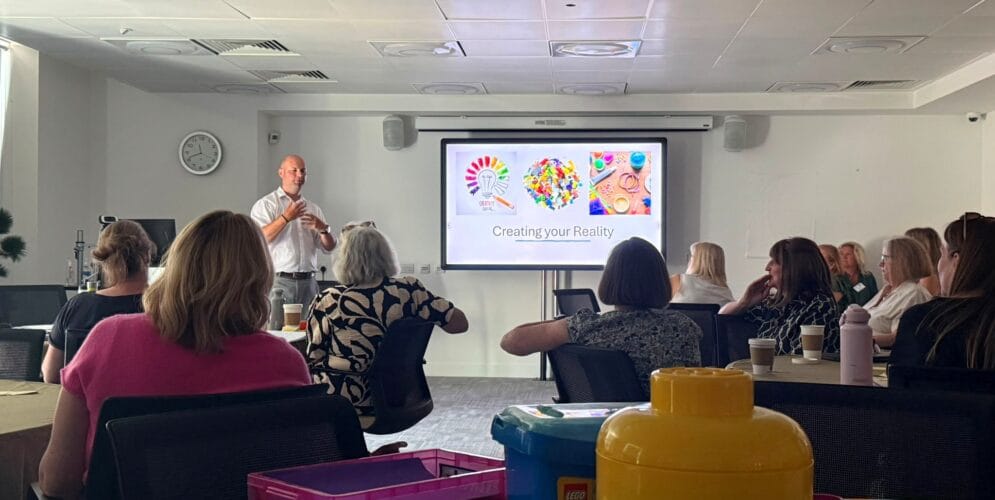
Session 1 Understanding the reality: participants shared honest leadership experiences and used creative activities to visualise barriers, ambition and workload.
Session 2 Recognising existing skills: participants mapped their existing strengths in communication, problem-solving and supporting others, and explored the shift from threat-based to drive-based leadership, including emotional regulation.
Session 3 Co-designing the programme: content was structured around four themes; Leading Self, Leading Individuals, Leading Teams and Leading Improvement. These themes were mapped against practical tools, coaching and day-to-day practice.
Sessions deliberately avoided a formal, classroom-style training format. Instead they used role play to practice realistic conversations, active-listening exercises, one-to-one conversations and small-group problem-solving, prioritising in-person delivery, timely support and embedding learning into everyday practice and appraisals.
RESULTS
Feedback from participants was gathered throughout the discovery phase and was consistently positive. Common themes included the value of a safe, honest space to reflect; the practical relevance of the activities; and a sense of shared ownership over the programme being built:
“Time with the team, getting a real sense that we all want to develop this programme together and the future programme will deliver real impact.”
“The listening real play as a really useful tool, coupled with the peer support ideas problem solving.”
“Seeing the ‘programme’ coming together but personally reflecting on being intentional and being in the moment listening.”
Participants also noted specific, immediately usable takeaways from the sessions, such as, changes to how they approached emails and conversations, with a clear enthusiasm for networking and connecting across teams.
IMPACT
Over the course of the three sessions, the group moved from sharing individual leadership experiences to collectively shaping a programme that reflects the lived realities of leadership within Adult Social Care. By starting with participants’ existing capability rather than perceived skills gaps, the conversations helped build confidence alongside competence.
The collaborative approach itself became part of the impact: participants highlighted the value of having genuine influence over the direction of the programme, not just being consulted on it. This shift from individual reflection to shared ownership, is now the foundation the programme is built on.
MOVING FORWARD
The programme, now named Building Confidence to Drive Great Practice, has moved from design into delivery, with its first live session taking place on the 22nd September.
- Core themes: self-awareness, resilience and wellbeing, difficult conversations, developing others, team performance and leading sustainable change
- Action Learning Sets: will run alongside face-to-face sessions, giving colleagues space to bring real challenges and work through solutions with peers
- A continued focus on practical tools over formal training, individual learning styles, pre/post-session reinforcement, and embedding leadership development into everyday practice and appraisals
The programme is a great example of what development can look like when it starts with listening and is built around the people taking part.
For further information, please contact Jason Roberts at jason.roberts@xytal.com